How to Become a CEX Listing Agent: A Practical Guide

For an independent crypto business-development consultant, becoming a CEX listing agent means building a controlled referral service between qualified token projects and exchanges that have agreed to receive your introductions. The exchange still decides whether to assess, accept, and list the asset. Your job is to verify the route, qualify the project, register the referral, and preserve a written evidence trail.
In real operating relationships, even Top-50 exchanges may work with listing agents without a signed contract. The exchange can confirm the terms in Telegram or email, assign a manager, and add the agent's Telegram username to an official verified-partner page.
The valuable asset is not the Telegram chat alone. It is a repeatable system that proves which project you introduced, under what terms, and when payment becomes due.
If you have sold almost anything online in B2B and are considering a small business, a token-listing agency is worth examining. It can start as a one-person, location-independent operation with no office, inventory, or mandatory employees. You can test it alongside a main job, and strong English helps because many exchange managers and project teams work across borders. Codex and Claude can automate much of the website, research organization, first-draft copy, and CRM administration. That creates attractive gross-margin potential when deals close, but it does not remove slow sales cycles, zero-deal months, taxes, compliance work, or the need for human negotiation.
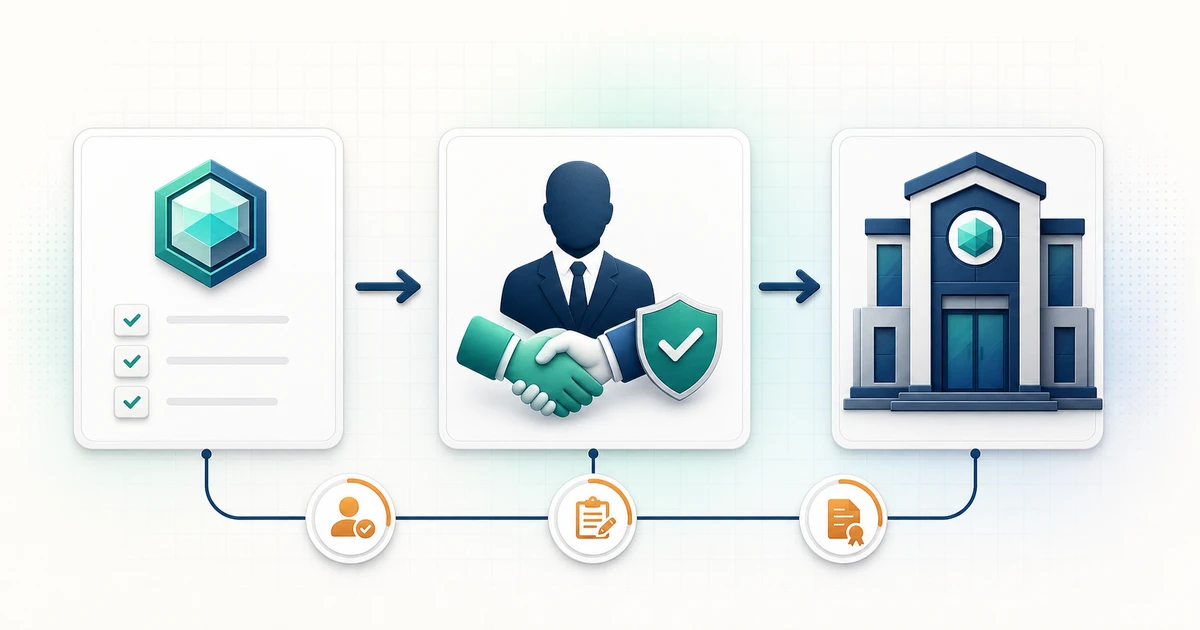
- Listing agents commonly earn 10%-20% of the eligible listing fee, and repeat deal volume can move the percentage toward the upper end.
- A formal contract is helpful but not always used. Save the exchange's written Telegram or email terms and verify your partner status on an official exchange surface.
- Speed matters because an exchange will almost never pay commission on a project already active in its CRM or BD conversations.
- The standard handoff is a private Telegram group containing the project representative, exchange manager, and one concise introduction.
- After the project pays the exchange, the agent commonly receives USDT or USDC to the confirmed wallet within 2-7 days.
- Experienced B2B sellers can test this as a lean, remote one-person agency and automate much of the administration with Codex or Claude.
Choose the CEX listing role you can actually perform
"Listing agent" is an informal commercial label, not a universal license or standardized job title. Your authority comes from an exchange-confirmed relationship. That confirmation may be a formal agreement, or it may be a written Telegram or email arrangement backed by an official partner listing and a verified exchange manager.
There are three practical models:
| Model | What you do | What you do not control | Best starting point |
|---|---|---|---|
| Introducer | Qualify a project, register the referral, and make a controlled introduction | Exchange review, price, timeline, or approval | Strong choice for a new independent operator |
| Listing-readiness advisor | Help the project organize materials, risks, contacts, and handoff steps | The exchange's assessment or final decision | Add after you can define a fixed scope |
| Full-service listing agency | Coordinate multiple exchanges, documentation, technical workstreams, and specialist vendors | Final decisions made by exchanges and third parties | Suitable only with deeper operations and verified partners |
The safest initial offer is usually introducer plus limited listing-readiness support. It is easier to explain, document, and deliver than a broad promise to "get tokens listed."
If you still need to decide how this fits among other services, use the broader services for crypto projects positioning guide. Keep your listing offer narrow:
I qualify token projects for a verified exchange route, register eligible referrals, and coordinate the first handoff. I do not guarantee listing approval.
An independent agent cannot promise approval, a listing date, token-price performance, or preferential treatment unless an authorized exchange agreement explicitly grants a narrower claim. An exchange such as Kraken describes its own asset assessment process, which is a useful reminder that the exchange remains the decision maker.
Build the partner layer before you source projects
Do not begin by collecting token projects. Begin by proving that you have a legitimate route for an introduction.
A signed agreement is useful, but it is not the only structure used in practice. Many exchanges run listing-agent relationships through Telegram. The exchange manager states the commission and rules, confirms the agent's username, and may add that username to an official verified listing-partner page.
Whether the relationship uses a contract, email, or Telegram, save the commercial terms in writing. An official partner page proves eligibility, but it does not answer every question that determines whether you get paid.
| Partner term | Question to resolve | Safe operating state |
|---|---|---|
| Counterparty status | Who is authorizing referrals, and is the manager's account verifiably connected to the exchange? | Named exchange manager on an official or independently verified channel |
| Referral authority | May you describe yourself as an introducer, partner, or agent? | Approved wording plus an official partner-page entry when offered |
| Eligible projects | What basic project, jurisdiction, chain, or maturity rules apply? | Written fit criteria |
| Fee base | Is compensation fixed, percentage-based, milestone-based, or absent? | Exact formula and currency |
| Referral registration | Where and how is a project registered before introduction? | Form, email, or partner portal with timestamp |
| Prior-contact rule | What happens if the exchange already knows the project? | Clear accept, reject, or exception process |
| Attribution window | How long does your registration remain valid? | Start date, end date, and renewal rule |
| Payment trigger | Does payment follow project payment, review, approval, or listing? | Objective event defined in writing |
| Payment schedule | When is an earned amount invoiced and paid? | Currency, invoice process, and due date |
| Refund or clawback | Can compensation be reversed after a refund or cancellation? | Conditions and calculation documented |
| Brand use | May you use the exchange name or logo in outreach? | Explicit written permission |
| Restrictions | Which countries, project types, and claims are prohibited? | Exclusion list added to qualification |
Use a simple status for each route:
- Verified: terms and referral procedure are confirmed in a saved contract, exchange-domain email, or verified Telegram conversation, with an official partner-page entry when the exchange offers one.
- Direct contact only: you know someone, but commercial authority is not confirmed.
- Application only: you can help a project prepare, but no referral compensation is agreed.
- Do not offer: identity, authority, or payment terms cannot be verified.
Only the first status supports a commission-based introduction offer. The other statuses may support separate advisory work if the scope and fee are disclosed honestly.
Contact exchanges and ask to become a listing partner
Use Tokpie's 2026 directory of 125+ CEX profiles, available emails and contacts, listing routes, and indicative costs as a working prospect list. The directory focuses on exchanges that actually consider token-listing applications, rather than venues limited to trading a small fixed set of major assets. Its fee data also gives you a first-pass way to estimate a possible commission: apply the common 10%-20% range to the relevant listing fee, then replace that estimate with the responding exchange's confirmed rate and eligible fee base. Contact every relevant exchange in the directory, but recheck each email, Telegram account, application route, and price against the exchange's official channel before sending or quoting terms.
Ask specifically about a token-listing referral partnership, not a trader affiliate program. Your message should request the commission percentage, any volume-based tier, the eligible fee base, the existing-contact rule, the payment trigger, the payout timing, and how the exchange verifies listing partners publicly.
Subject: Token-listing partner request

Hello Listing Team,

I source and pre-qualify token projects that are actively considering a CEX listing.

Do you work with external listing agents or introducers? If yes, please confirm:

1. The commission percentage and any higher tier for repeat deal volume.
2. Which part of the listing package is commissionable.
3. How I register a project before making an introduction.
4. What counts as an existing exchange contact.
5. When commission becomes payable and how quickly it is paid.
6. Whether my Telegram username can be added to your official verified-partner page.

My website: [your landing page]
My Telegram: [your username]

Thank you.
Record every reply in the partner matrix. Exchanges that do not respond remain unverified routes, while exchanges that confirm terms become the first offers you can present to projects.
An exchange will almost never pay you for a client already active in its CRM, application queue, email history, or BD conversations. Find relevant projects early, obtain permission, and register the lead quickly. An exception may be possible when the exchange has failed to close the project and your trusted relationship is necessary for the deal. In that case, state that the project will proceed only with your recommendation and obtain a written agent-assisted attribution exception before the handoff.
Qualify projects before the exchange handoff
Your reputation with the exchange is partly a function of what you refuse to forward.
An interested founder is not automatically a qualified referral. Build a short intake that tests project fit, readiness, budget authority, and trust. The exact criteria will vary by exchange, but the following structure gives you a defensible starting point:
Project and market fit
- The official website, token contract, chain, team contacts, and public channels are consistent.
- The project has a clear product or network purpose beyond a listing announcement.
- Public claims do not depend on guaranteed returns, fake partnerships, or misleading scarcity.
- The requested exchange route fits the project's target users and supported jurisdictions.
Listing readiness
- The project can provide the documents and technical information requested by the exchange.
- Token supply, distribution, vesting, treasury, and material holder information can be explained.
- Security reviews, incident history, and contract ownership controls can be discussed accurately.
- Liquidity and market-making responsibilities are understood without promising trading outcomes.
Commercial readiness
- A named decision maker owns the listing process.
- The project has discussed its budget and knows which party pays which fee.
- The desired timing is a preference, not a demand for guaranteed approval.
- The team will use official invoices and approved payment routes.
Trust and exclusions
- The project identity and domain have been checked.
- Sanctions, jurisdiction, or other restrictions from your partner agreement have been screened.
- Prior conversations with the exchange have been disclosed.
- No one is asking you to hide a material fact or misrepresent a relationship.
Create one of four outcomes: qualified, needs evidence, not eligible for this route, or do not engage. Do not let "interested" become a pipeline stage that bypasses the checklist.
For a broader system that connects sourcing, qualification, and outreach, use the crypto project acquisition operating system.
Protect referral attribution before the introduction
The handoff should be the last step in the attribution process, not the first. In a Telegram-based partner relationship, the saved messages and group history become the operating evidence trail.
Use this order:
- Get the project's permission to share the relevant details.
- Submit the project through the exchange's approved registration route.
- Receive written confirmation that the referral is accepted and attributed to you.
- Make the formal introduction in the approved channel.
- Record the next owner, stage, and evidence link in your CRM.
If the exchange already knows the project, stop and apply the prior-contact rule. Do not assume that your later introduction is commissionable. If you are reviving a stalled deal through an established relationship with the project, negotiate the exception explicitly with the exchange manager before opening the group.
The six-step Telegram workflow used in practice
- Secure an exchange partner. Contact listing teams across the exchange directory. If one exchange agrees, save its terms, confirm your commission percentage, connect with the assigned manager, and make sure your Telegram username appears on the exchange's official verified-partner page when that verification option exists.
- Run a 100-project outreach test. Send well-targeted cold emails with a real domain, correct SPF, DKIM, and DMARC, clean copy, and an easy way to verify your exchange eligibility. A practical average for token-listing outreach is around 2% interested conversion, so 100 projects may produce about two interested replies. A real first batch can still produce one, none, or more.
- Qualify and negotiate with the project. Ask immediately whether the project is already communicating with your partner exchange. If not, explain the listing package, confirm budget and authority, and collect the project details needed by the exchange.
- Pre-register the hot lead. Message the exchange manager by Telegram or email, explain that you have an interested qualified project, and ask the exchange to check its CRM and active conversations. Continue only after the manager confirms that the project is clear or grants a written exception.
- Open the private Telegram group. Invite the token-project representative and exchange manager. Send one concise introduction with the token address, token name, symbol, website, business email, listing objective, and the names and roles of both parties. The exchange team now owns commercial follow-up. If the exchange asks you to transfer group-admin rights to its employee, verify the account and transfer the rights.
- Track payment and commission. Wait for the token project to pay the exchange's official invoice. The exchange then commonly sends your agreed commission to the confirmed personal or business crypto wallet in USDT or USDC within 2-7 days. Confirm the wallet address and network through a second channel before the first payout.
Minimum qualified referral packet
Keep the packet concise. Share only what the exchange has requested and the project has authorized:
- Official project name and website
- Token name, symbol, contract address, and blockchain
- Decision-maker name, role, and approved contact details
- One-paragraph project and market summary
- Current lifecycle stage and desired listing objective
- Readiness checklist status
- Relevant security, legal, or technical materials
- Prior exchange contact disclosure
- Date and proof of project permission
Hot-lead registration message
Hi [manager name], I have a hot qualified lead for [exchange name].

Project: [token name] ([symbol])
Website: [website]
Token address: [token address]
Blockchain: [blockchain]
Representative: [name, role, business email]

The project has confirmed interest and authorized an introduction.

Please check whether the exchange already has an active contact or open negotiation with this project. If the project is clear, please register it under my partner account and confirm attribution before I open the Telegram group.
Save the outbound message and the reply. A CRM checkbox that says "registered" is not evidence unless it links to the actual confirmation.
Private-group introduction
Hello everyone,

I am introducing [project representative, role] from [token name] to [exchange manager, role] from [exchange name].

Project details:
- Website: [website]
- Token name and symbol: [token name] ([symbol])
- Token address: [token address]
- Blockchain: [blockchain]
- Business email: [email]
- Listing objective: [short objective]

The exchange has confirmed that this referral is registered under my partner account. I will remain available for context while the exchange team leads the next steps.
How CEX listing-agent commission works in practice
In direct exchange-partner work, listing agents commonly receive 10%-20% of the eligible listing fee paid by the referred project. New or occasional agents often begin near the lower end. Agents who repeatedly bring qualified projects that complete payment can negotiate toward the upper end because they have become a repeatable sales channel for the exchange.
The percentage is real, but the calculation base still matters. An exchange may pay commission only on the base listing fee and exclude market making, volume assistance, liquidity, token allocations, legal work, discounts, taxes, or promotional packages. Confirm both the percentage and the eligible fee base before sending a client.
Use a formula that exposes those variables:
Monthly gross commission =
paid, attributed deals
x eligible listing fee
x agreed commission percentage
The important words are paid, attributed, and eligible. A conversation, application, approval, or listing is not automatically a payable event. In the common Telegram workflow, the agent is paid only after the token project pays the exchange.
Four transparent $10,000 scenarios
These examples are arithmetic illustrations only. They are not typical results, forecasts, or recommended prices.
| Scenario | Visible inputs | Gross monthly commission |
|---|---|---|
| Five paid referrals | 5 deals x $20,000 eligible fee x 10% | $10,000 |
| Four paid referrals | 4 deals x $20,000 eligible fee x 12.5% | $10,000 |
| Three paid referrals | 3 deals x $25,000 eligible fee x 15% | $11,250 |
| Two higher-tier referrals | 2 deals x $30,000 eligible fee x 20% | $12,000 |
Backsolve your operating target with real terms:
- Start with the exchange-confirmed 10%-20% rate or fixed payment.
- Estimate only referrals the exchange accepted and attributed.
- Apply the exchange's actual commission base, not the project's whole launch budget.
- Subtract refunds, taxes, tools, contractors, and currency-conversion costs.
- Track the project payment date and the expected 2-7 day commission window.
- Record the stablecoin, network, wallet address, transaction hash, and cash actually received.
The scenarios above show how to audit the math. They do not show how many eligible projects exist, how often exchanges accept referrals, how long decisions take, or whether a project will pay.
Build a landing page before you scale outreach
A simple landing page makes both sides of the marketplace easier. Exchanges can review who you are before approving a partner relationship, and token projects can verify your role before discussing a listing.
Use Codex or Claude Code to build a focused one-page site on your own domain. Keep the page simple:
- Your real name, company, business email, and Telegram username
- Your exact role as a listing introducer or listing-readiness advisor
- Exchange relationships only when the exchange has authorized public mention
- A link to each official partner page that verifies your username
- The project types, chains, and budget bands you handle
- Your six-step qualification and introduction process
- A clear statement that the exchange controls approval and timing
- A contact form or calendar plus a simple privacy notice
Keep the agency lean without automating trust
You do not need employees to validate the model. A solo operator can use Codex or Claude to draft and maintain the landing page, structure exchange and project research, prepare personalized first drafts, summarize call notes, generate follow-up tasks, and connect forms to a CRM. This makes the business practical from almost anywhere and easier to run alongside existing work.
Keep human control over exchange-manager identity, partner authorization, prior-contact checks, project claims, negotiations, compliance decisions, wallet addresses, and payout networks. Automation should reduce administration, not manufacture trust or send unreviewed promises at scale.
Use the offer-first service framework to write the page around one decision, not a long capability list. If you plan to publish educational content around the page, use the content-to-CTA framework for Web3 service providers to connect each article or checklist to a relevant next step.
After launch, use X/Twitter to distribute listing-readiness observations, fee-comparison notes, project checklists, and anonymized lessons from the process. The purpose is to make your name familiar and verifiable before the first email, not to promise a listing in public.
Find projects without looking like a listing scam
A trustworthy listing-agent pitch begins with fit, not access.
Look for public signals that a project may be entering a listing window:
- A working product, active roadmap, or recent mainnet milestone
- Documented token and contract information
- Expansion to a new chain or market
- Public hiring or partnership activity
- A founder, BD lead, or operations owner discussing distribution
- Evidence of security, compliance, and operational preparation
Manual sources can include official project websites, ecosystem directories, chain explorers, public social channels, and conference exhibitor lists. LeadGenCrypto can shorten the contact-discovery step by providing fresh token-project records with project and contact fields.
The Free plan lets you claim one project contact every 24 hours, which is enough to learn the workflow manually. Paid delivery supports a chosen automatic daily quota from 2 to 1,000 leads per day when the offer and message are validated. Review the Leads documentation before deciding how those fields fit your qualification process.
Start by sending emails manually so you can see which questions and objections repeat. Once several live conversations become difficult to track, use the six-step CRM pipeline for crypto-project outreach. When the message is proven and you are ready for automated sequences, follow the Instantly workflow for crypto cold outreach.
Before the 100-project test
Do not send the batch until the mailbox and message pass these checks:
- Build the message and follow-up logic with the step-by-step cold email guide.
- Configure the domain with the SPF, DKIM, and DMARC deliverability guide.
- Ramp a new mailbox with the email warm-up plan.
- Remove risky partnership, profit, urgency, and guarantee language with the crypto outreach spam-words guide.
- Test the exact message with the Mail-Tester walkthrough.
- Run the final cold-outreach pre-flight checklist before scaling.
Every email should explain how the project can verify your eligibility. Link directly to the exchange's official partner page that shows your Telegram username, and make sure the identity on that page matches the name, domain, and Telegram account in your message.
Do not claim that you "represent major exchanges" unless the exact statement is authorized. A safer first touch is specific about scope and uncertainty:
Subject: Listing-readiness question for {{tokenName}}

Hello,

I work with token projects on qualification and controlled introductions for a selected exchange route.

I reviewed {{website}} and noticed the project is active on {{blockchain}}. Before suggesting any route, I would need to confirm readiness, prior exchange contact, target markets, and the person who owns the process.

If listing readiness is a current priority, I can send the short qualification checklist. I do not promise approval or timing.

If this is not relevant, reply no and I will close the record.
To see how listing pitches fail in real inboxes, compare the listing-platform cold email teardowns.
Run the business from a CRM and an evidence trail
The CRM should tell you what was agreed, who owns the next action, and whether attribution is protected.
Use three connected record types:
| Record | Minimum fields |
|---|---|
| Exchange or partner | Legal entity, authorized contact, route status, allowed claims, eligibility rules, fee formula, attribution window, payment trigger, restrictions |
| Project | Website, token address, blockchain, token name and symbol, decision maker, qualification outcome, desired route, prior-contact disclosure, exclusion status |
| Referral opportunity | Partner, project, registration date, acceptance evidence, attribution expiry, current owner, stage, payable event, invoice status, payment status |
A useful pipeline might be:
- Project identified
- Identity checked
- Qualification in progress
- Qualified
- Project permission received
- Referral registration submitted
- Attribution confirmed
- Introduction made
- Exchange-led review
- Payable event confirmed
- Invoice submitted
- Paid, rejected, expired, or disqualified
Never use a vague "closed won" stage when the contract defines several events between introduction and payment.
Keep outreach and payments boring
Trust grows when the operational details are predictable.
- Send from a real domain with a clear identity and working reply path.
- Configure SPF, DKIM, and DMARC, and follow the current Gmail sender requirements.
- Keep subject lines and sender information accurate.
- Include a simple opt-out and honor it through a suppression list.
- Move the conversation to a private Telegram group only after the project agrees to the introduction.
- Verify payment instructions in a second channel if they change.
- Project payments should normally go to the exchange through an official invoice unless the exchange's written terms authorize another flow.
- After the project pays, confirm the agent-payout wallet, stablecoin, and network through a second channel. A common operational window is 2-7 days for USDT or USDC.
- Keep human approval on every referral registration and formal introduction.
In the United States, the FTC's CAN-SPAM compliance guide explains requirements for commercial email, including business-to-business messages. Other jurisdictions can impose different or additional rules. This article is general business information, not legal, tax, or compliance advice. Use the crypto B2B leads compliance guide as a starting checklist and get qualified advice for the places where you and your recipients operate.
The exchange decides on the asset. The project decides whether to engage. The agreement decides whether you are paid. Your records should make all three boundaries visible.
Your minimum operating system
Before you call yourself a CEX listing agent, confirm that each item below is true:
- One partner route is verified in writing.
- Your Telegram username is verified on an official exchange page when that option exists.
- Your public role description matches your actual authority.
- Eligible and excluded project criteria are documented.
- The 10%-20% commission rate, eligible fee base, and any volume tier are confirmed.
- Referral registration and prior-contact rules are documented.
- Attribution window and payment trigger are documented.
- Your intake separates interested projects from qualified projects.
- Project permission is recorded before data is shared.
- Every registration links to written acceptance evidence.
- Outreach uses accurate identity, opt-out, and suppression controls.
- Payment instructions use authorized and verifiable channels.
- The stablecoin, network, wallet, and 2-7 day payout process are documented.
- Revenue reporting separates conversations, attributed deals, invoices, and cash received.
- Every listing, timeline, and performance claim stays under the exchange's control.
If several boxes are empty, do not scale outreach yet. Fix the partner and evidence layers first.
Start with one qualified project, not a giant list
The first useful test is not whether you can send 1,000 emails. It is whether one relevant project can move through your qualification, registration, and handoff process without ambiguity.
Use one fresh project record to test:
- Can you verify the identity and decision maker?
- Does the project fit your written partner criteria?
- Can you explain your role without implying approval?
- Does the project consent to a controlled introduction?
- Will the exchange confirm attribution before the handoff?
Test the workflow
Review one fresh token-project contact
Use a real project record to practice identity checks, qualification, and a trust-first first touch before you scale.
Keep improving the referral system
Your first version will expose gaps: missing partner answers, qualification questions that do not change decisions, weak proof, or pipeline stages that nobody owns.
Review the system after each real project:
- Which disqualifier should have been found earlier?
- Which agreement term created confusion?
- Did the exchange accept the registration before introduction?
- Could another operator reconstruct the evidence trail?
- Did the project understand what was advisory and what was exchange-controlled?
- Did the payment event and cash date match the forecast?
Improve one control at a time. That is how a contact-based hustle becomes an auditable referral business.
LeadGenCrypto notes
Get practical crypto outreach systems
Receive new playbooks for qualifying token projects, improving outbound trust, and building cleaner service-provider pipelines. No hype. Opt out anytime.
Frequently asked questions
What does a CEX listing agent do?
A CEX listing agent typically identifies and qualifies token projects, registers eligible referrals, and coordinates an introduction to an exchange or authorized partner. The exact role depends on a written agreement. The exchange retains control over assessment and listing decisions.
Do I need an official agreement with an exchange?
Not always. Even Top-50 exchanges may work with listing agents through Telegram without a signed contract. You still need saved written terms, a verifiably official exchange manager, and public partner-page verification when the exchange offers it. Without those controls, do not claim that the exchange recognizes or will pay for your introductions.
Can a CEX listing agent guarantee a listing?
No responsible independent agent should guarantee approval, timing, price performance, or trading volume. Those outcomes depend on the exchange, the project, market conditions, and other parties outside the agent's control.
How does a crypto exchange listing agent get paid?
Listing agents commonly earn 10%-20% of the eligible listing fee. New agents often begin near 10%, while agents who repeatedly deliver qualified paying projects can negotiate toward 20%. The project pays the exchange, then the exchange commonly sends the agent's commission in USDT or USDC to the confirmed wallet within 2-7 days.
What is referral attribution?
Referral attribution is the written record that connects a specific project to your accepted introduction for a defined period. It should identify the registration date, prior-contact result, attribution window, and rules for exceptions or expiry.
When should I introduce the project?
Make the formal introduction only after the project has authorized the handoff, the exchange has accepted the registration, and the exchange has confirmed attribution. This order reduces disputes and unnecessary data sharing.
What if the exchange already knows the project?
The exchange will almost never pay commission on a project already active in its CRM or conversations. One exception is a stalled opportunity where your trusted project relationship is necessary to close the deal. Explain that situation to the exchange manager and obtain a written agent-assisted attribution exception before reopening the introduction.
How many projects do I need to earn $10,000 per month?
At a 10% commission on a $20,000 eligible listing fee, five paid attributed deals produce $10,000 gross commission. At 12.5%, four deals at the same eligible fee also produce $10,000. These are planning scenarios, not guaranteed monthly results.
Should the project pay the listing fee to the agent?
Normally, the token project should pay the exchange's official invoice directly. After the exchange receives payment, it sends the agent's separate commission payout to the verified wallet. Do not collect or redirect the exchange's listing fee unless the exchange has explicitly authorized that structure.
Can I use cold email to find listing clients?
Yes. A correctly targeted listing-service campaign can average around 2% interested conversion, so 100 carefully selected projects may produce about two interested replies. Results vary. Use a verified domain, SPF, DKIM, DMARC, safe copy, an opt-out, and a direct link to the exchange page that proves your partner eligibility.
Where can I find CEX listing contacts and partner routes?
Start with Tokpie's 2026 directory covering 125+ CEX profiles. It focuses on exchanges that actually consider token-listing applications and includes available emails or other contacts, application routes, indicative fees, market-making or volume-assistance notes, legal requirements, timelines, and real response outcomes. Use the indicative listing fee to make a first commission estimate at 10%-20%, then reverify the contact, price, eligible fee base, and exact percentage with every responding exchange.
Should a listing agent build a landing page?
Yes. A focused landing page built with Codex or Claude Code gives exchanges and token projects a consistent place to verify your identity, authorized exchange relationships, process, and contact details. Promote useful listing-readiness content from the page through X/Twitter, but never imply guaranteed approval.