How to Use GitHub to Sell Services to Crypto Projects

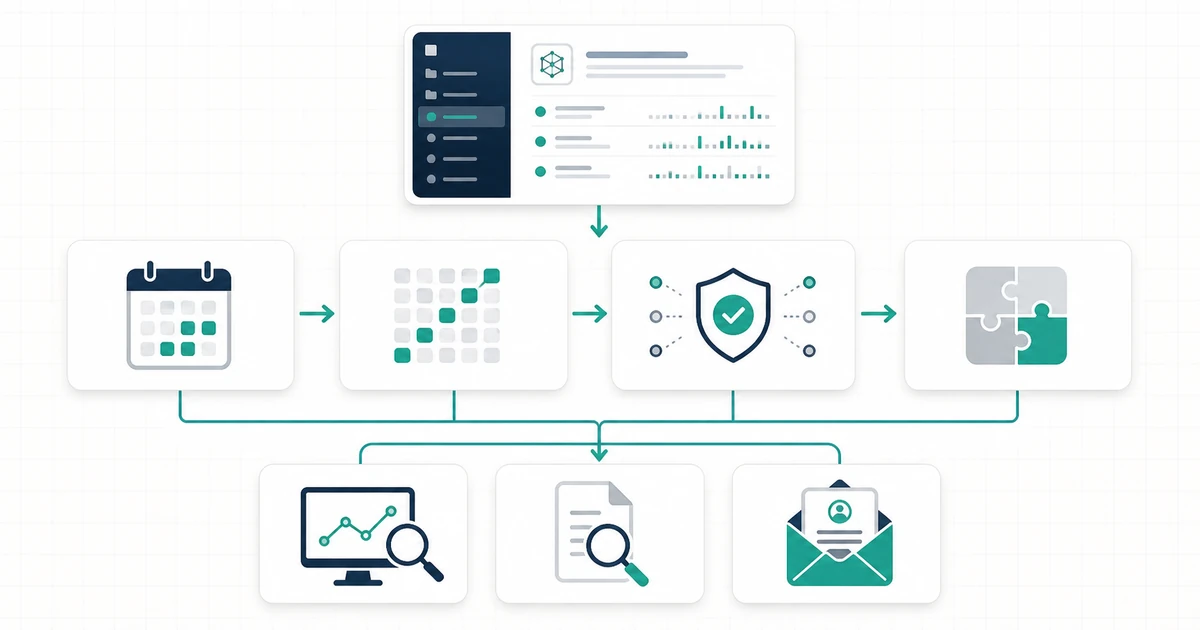
- Treat repository activity as a research lead, not proof of buying intent.
- Require recent, repeated, and corroborated evidence before forming a service hypothesis.
- Match each public signal to one service you can credibly deliver.
- Use the scorecard to monitor, research, prioritize, or skip a project.
- Keep security claims cautious and never infer a problem from missing public evidence.
- Offer a small useful asset through an appropriate business channel.
An active repository can still leave you with no safe reason to pitch.
You can see releases, issues, pull requests, and documentation changes. Yet "active on GitHub" describes too many projects to guide a credible offer.
For a technical service provider, that missing context is the real prospecting problem. You need to know whether the activity points to a repeated workflow need that fits what you sell.
That is where GitHub becomes useful. Use it as a public evidence layer, not as a buyer list or a shortcut to developer contact details.
The goal is not to prove that a crypto project has pain, budget, or vendor intent. The goal is to form a cautious hypothesis, test it, and reject it when the evidence is weak.
If you need the broader system around discovery, qualification, contact capture, and CRM stages, start with the project discovery and pipeline playbook. This article goes deeper on one channel: public development activity.
GitHub Is a Timing and Disqualification Tool, Not a Buyer List
A project name and contact tell you who you could reach. Repository context helps you decide whether you should.
The weak workflow looks like this:
Find an active repository
-> mention a recent commit
-> pitch a broad service menu
The useful workflow adds evidence and a stop decision:
Confirm the official repository
-> observe a recent pattern
-> read the surrounding context
-> look for repetition
-> corroborate elsewhere
-> match one service
-> score the opportunity
-> monitor, research, pitch a micro-offer, or skip
That final "skip" option matters. GitHub research is valuable when it prevents an irrelevant pitch, not only when it creates one.
Imagine two projects with similar release activity.
Project A is shipping frequently, but issues are resolved quickly, documentation matches the current release, and no recurring friction is visible.
Project B is shipping at the same pace, but several recent issues describe the same setup problem and the first-run guide still shows the previous configuration.
A documentation or developer relations provider has a plausible reason to research Project B further. Project A may deserve monitoring, not a pitch.
A public repository shows only what a project chooses to expose. It does not reveal internal priorities, private audits, staffing plans, budget, procurement, or willingness to hire an outside provider.
Use Four Gates Before You Call Activity a Sales Signal
Activity becomes commercially interesting only after it passes four gates.
| Gate | Question | Pass condition | Common false positive |
|---|---|---|---|
| Activity | Is meaningful work happening now? | Recent releases, substantive changes, or current discussion | Bot updates, formatting commits, or an archived mirror |
| Repetition | Does the same friction appear more than once? | Several related issues, fixes, questions, or release notes | One dramatic issue with no pattern |
| Corroboration | Does another public source support the interpretation? | Current docs, changelog, release, or official project page aligns | An old README while docs live elsewhere |
| Service fit | Does the pattern map directly to what you sell? | One credible service and one useful artifact | A technical detail forced into an unrelated offer |
Gate 1: Confirm the repository that matters
Before scoring anything, confirm that the organization or repository is official. Then identify the current core repository.
Watch for:
- forks and mirrors;
- archived repositories;
- examples that are not production code;
- inactive repositories inside an otherwise active organization;
- automated dependency or formatting activity;
- separate repositories for contracts, SDKs, nodes, docs, or integrations.
A mature crypto project may split current work across several repositories. The first search result may not represent the current product.
Gate 2: Look for repeated friction
One issue is a clue. Repetition is a reason to investigate.
Useful clusters can include:
- repeated installation or deployment questions;
- similar failures after several releases;
- recurring configuration mistakes;
- migration confusion after an API or SDK change;
- requests for missing examples;
- chain-specific compatibility problems;
- reopened regressions;
- the same answer repeated across issues and discussions.
Do not count issues without reading them. Three related recent reports can matter more than a backlog of one hundred unrelated requests.
Gate 3: Corroborate the interpretation
A repository observation becomes stronger when another official public surface supports it.
Repository:
Several recent setup questions refer to the same configuration.

Current release:
The relevant configuration changed.

Official docs:
The setup guide still shows the previous path.

Cautious hypothesis:
New integrators may be hitting avoidable onboarding friction.
The hypothesis is narrower than "their documentation is bad." It also leaves room for missing context.
Gate 4: Match one service
A signal is useless when it has no direct relationship to your offer.
If you sell DevOps, documentation lag may be context but not your strongest opening. If you sell technical writing, a failed CI check is probably not your signal. If you sell audits, a missing public audit link is too weak by itself.
Write the match in one sentence:
Because we observed [recent repeated pattern], [specific workflow]
may deserve attention, and our [specific service] could help by
delivering [small useful asset].
If you cannot complete that sentence without guessing, the opportunity has not passed the four gates.
Match the Signal to a Service You Actually Sell
The signal-to-service match is where research becomes a useful sales decision.
The broader services positioning guide for crypto projects helps you choose the right category and buying moment. Use this matrix to narrow a public development pattern into one testable offer.
| Public signal | Cautious hypothesis | Services that may fit | Useful first offer | Do not assume |
|---|---|---|---|---|
| Frequent releases plus recurring post-release issues | Release support may be under pressure | DevOps, QA, observability, release engineering | Three-point release workflow review | Fast shipping means poor engineering |
| Repeated installation or deployment questions | Onboarding may create avoidable support work | DevRel, technical writing, developer tooling | First-run friction teardown | One confused user proves a pattern |
| Docs lag behind a current release | The public explanation may not match the product | Technical writing, DevRel, SDK documentation | Release-to-docs gap map | Official docs do not exist elsewhere |
| API or SDK changes plus migration questions | Integrators may need clearer migration support | SDK development, integration engineering, DevRel | Migration-guide outline | Breaking changes were accidental |
| Recurring CI failures or regressions | One area may consume repeated engineering attention | QA, CI/CD, DevOps | Test and CI bottleneck note | Public checks show the full process |
| Contributor questions plus review backlog | Contributor workflow may have friction | DevRel, contributor operations, engineering support | Contributor workflow teardown | The team is understaffed |
| New chain work plus compatibility issues | Multi-chain complexity may be increasing | Blockchain development, RPC, node, API, QA | Chain compatibility matrix | The new chain is a strategic priority |
| Active contract changes around a release | Security readiness may be timely to discuss | Auditors, security providers | Audit-readiness checklist | The project is insecure |
| Repeated dependency maintenance | Maintenance may consume recurring attention | DevOps, security tooling | Dependency workflow review | Automated updates equal urgent intent |
| Repeated beginner questions | Developer onboarding may be unclear | DevRel, docs, community engineering | Issue-to-FAQ map | Popular projects should have no beginner questions |
Do not turn every row into a pitch. Pick the row that matches your real capability, then use a vertical proof wedge to make the service, evidence, and low-risk ask specific to one segment.
Score the Opportunity Before You Personalize Anything
The scorecard is a brake on enthusiasm, not a prediction model.
Score each dimension from 0 to 2.
| Dimension | 0 points | 1 point | 2 points |
|---|---|---|---|
| Recent activity | Little relevant current work | Occasional maintenance | Sustained relevant development or releases |
| Repeated friction | No visible pattern | One or two related examples | Clear recurring pattern |
| Gap clarity | Mostly speculation | Possible visible gap | Specific observable gap |
| Service fit | Weak connection | Partial connection | Direct connection to your service |
| Corroboration | One weak observation | Two related observations | Repository evidence plus official confirmation |
Then apply a sensitivity penalty.
| Sensitivity | Penalty |
|---|---|
| Ordinary operational observation | 0 |
| Ambiguous inference with limited evidence | -1 |
| Security, privacy, vulnerability, or reputational claim based mainly on absence | -2 |
Decision bands
| Final score | Recommended action |
|---|---|
| 0 to 3 | Skip or monitor |
| 4 to 6 | Research more |
| 7 to 8 | Consider a permission-based micro-offer |
| 9 to 10 | Prioritize for careful outreach |
This score is not science. It does not estimate conversion probability or budget. Its job is to make the evidence standard visible before a salesperson spends time on personalization.
Two Worked Examples Show When to Pitch and When to Stop
The same research method should produce both a good outreach candidate and a clear no-pitch decision.
Example 1: A documentation provider has enough evidence
Suppose a DevRel studio finds:
- three substantive releases in six weeks;
- several issues asking about the same configuration;
- a README that appears to show the earlier setup;
- current official documentation using the older example.
The score could look like this:
Recent activity: 2
Repeated friction: 2
Gap clarity: 2
Service fit: 2
Corroboration: 2
Sensitivity penalty: 0

Final score: 10
Decision: Prepare a small documentation micro-offer.
A useful asset could be a one-page developer onboarding note:
- The setup step that appears inconsistent with the current release.
- The repeated public question.
- One example that may reduce ambiguity.
- A short migration-section outline.
The provider is not claiming to understand the entire documentation system. They are offering a bounded artifact based on a visible path.
Example 2: An auditor should not pitch from fear
Suppose an audit provider finds:
- active contract commits;
- a release that may be approaching;
- no audit link in the repository.
That is not enough to conclude that the project is unaudited.
Recent activity: 2
Repeated friction: 0
Gap clarity: 1
Service fit: 2
Corroboration: 0
Sensitivity penalty: -2

Final score: 3
Decision: Do not make the claim. Research more or monitor.
The project may have a private audit, a report on another official page, a review covering another repository, or work already in progress.
If audits are your service, use the smart contract audit offer playbook to package scope and proof without turning missing public evidence into fear.
Never imply that a project is vulnerable, unaudited, unsafe, or negligent because a public page is missing. Report only what you verified, state the limit, and use a responsible disclosure path if you discover a real security issue.
Turn the Hypothesis Into a Permission-Based First Contact
Good GitHub-based outreach proves that you looked without making the recipient feel watched.
Use this five-part formula:
- Observation: Name one recent public pattern.
- Caveat: State that public activity may not show the internal picture.
- Relevance: Explain the possible operational consequence.
- Asset: Offer something small and useful.
- Permission: Ask whether the team wants it.
If you need help turning public evidence into a compact first-touch asset, use the teardown-first prospect research workflow.
Template for documentation or DevRel services
Subject: Small developer-onboarding note for {{tokenName}}

Hi team at {{website}},

I reviewed the public development activity around {{tokenName}} and noticed
several recent setup questions around the current release.

I may be missing context from your internal workflow, but I mapped the public
onboarding path and found three places where the docs may remove repeated
questions.

I put them into a one-page note. Would it be useful if I send it?

If this is not relevant, reply "no" and I will close the loop.

Thanks,
[Your Name]
Template for DevOps or QA services
Subject: Quick release-workflow observation for {{tokenName}}

Hi team at {{website}},

I noticed {{tokenName}} has been shipping actively and several recent public
discussions appear related to release or integration friction.

I may be missing private context, so I am not assuming there is a problem.

I mapped the visible workflow and identified three checks that may be worth
reviewing before releases. Would you like the short note?

If this is not relevant, reply "no" and I will not follow up.

Thanks,
[Your Name]
Do not turn issues, pull requests, or developer discussions into your sales inbox. Use GitHub for research context, then contact the project through an appropriate, verified business channel.
Keep the outreach relevant, respect local rules, use suppression lists, avoid personal data you do not need, and provide an easy opt-out. Never publish sensitive findings as a sales tactic.
Manual Review Beats Automated Conclusions
Automate the alert, not the accusation.
| Method | Best use | Advantage | Limitation |
|---|---|---|---|
| Manual repository review | Small, high-value prospect list | Strong context | Slow |
| Saved research checklist | Repeated analyst workflow | Consistent decisions | Still manual |
| Activity monitoring | Watch known projects for changes | Finds new events faster | Events still need interpretation |
| AI-assisted issue grouping | Group repeated public themes | Reduces reading time | Can misclassify or overstate |
| Human review after automation | Final qualification | Combines speed with judgment | Requires a disciplined owner |
A simple scaling workflow is:
Known crypto projects
-> monitor public repository activity
-> detect a possible signal
-> verify the official context
-> score service fit
-> prepare a micro-offer
-> contact an appropriate business channel
Store evidence, not judgments
Useful CRM fields include:
repository_url
signal_date
signal_type
signal_summary
evidence_urls
possible_need
service_category
confidence_score
sensitivity_penalty
micro_offer
outreach_status
next_review_date
Bad note:
Their DevOps is terrible.
Better note:
Three recent public issues relate to deployment configuration after the
latest releases. The README may still show the earlier setup. Recheck before
outreach.
Record the date, evidence, uncertainty, and next review action. Do not store sensitive personal data or speculative reputational claims.
Copy-Paste 10-Minute GitHub Sales Research Checklist
Use this checklist to make the method repeatable. Ten minutes is a triage target, not a promise.
[ ] Confirm the organization or repository belongs to the crypto project.
[ ] Identify the current core repository, not a fork, mirror, example, or archive.
[ ] Review meaningful activity from a recent window, such as 30 to 90 days.
[ ] Check releases and read what changed.
[ ] Read relevant issues instead of relying on issue counts.
[ ] Review connected pull requests and maintainer responses.
[ ] Separate human work from automated updates.
[ ] Look for a repeated pattern, not an isolated complaint.
[ ] Compare the current release with the README and official documentation.
[ ] Check whether chains, APIs, SDKs, contracts, or integrations are changing.
[ ] Write the possible service need as a hypothesis.
[ ] Find at least two supporting public observations.
[ ] Apply the sensitivity penalty to security or reputational inferences.
[ ] Map the signal to one service you actually sell.
[ ] Create one small useful asset or recommendation.
[ ] Recheck the evidence immediately before outreach.
[ ] Use an appropriate business contact and include an easy opt-out.
[ ] Record the evidence date, decision, and outcome.
[ ] Monitor or skip when the fit is weak.
What This Method Cannot Tell You
GitHub can improve your question. It cannot answer the private buying questions for you.
It cannot reliably tell you:
- whether the project has budget;
- whether the observed workflow is an internal priority;
- whether a private fix, audit, or vendor engagement already exists;
- whether the team wants outside help;
- who owns procurement;
- whether the timing is right for a commercial conversation.
It also cannot make a broad offer relevant. If the signal fits several unrelated services, narrow the offer before outreach.
The safest conclusion usually sounds like this:
Based on current public development activity, our service may be relevant because...
Then test every word. Is the signal current? Is it repeated? Did you corroborate it? Does it match your service? Can you offer something useful without pretending to know the internal situation?
If you already have a narrow technical offer and want one current project record to test against the scorecard, use the LeadGenCrypto Leads guide to start with a small manual check before you build a larger workflow.
The advantage is not certainty. It is better timing, better disqualification, and a more useful first conversation.
Frequently Asked Questions
Can GitHub tell me which crypto projects are ready to buy services?
No. Public activity can reveal evidence worth investigating, but it cannot prove budget, buying intent, internal priority, or willingness to hire an outside provider.
Should I use GitHub to find email addresses of project developers?
Use GitHub primarily for public service-fit research. For commercial outreach, prefer an appropriate business contact published or verified by the project. Do not harvest personal addresses from commits or developer profiles.
How many issues indicate a real service need?
There is no universal number. A small cluster of related, recent issues can be more useful than a large unrelated backlog. Read the discussion, maintainer response, linked pull requests, and current status.
How recent should a GitHub signal be?
Use a recent window that fits the project's release pace. Thirty to ninety days is a practical triage starting point, not a rule. Slower protocols may require a longer view.
Does frequent GitHub activity mean a crypto project has budget?
No. Activity can show that work is happening. It says nothing reliable about available budget, procurement, or vendor intent.
Does no public audit mean a project is unaudited?
No. An audit may be private, published elsewhere, cover another repository, or already be in progress. Never use absence alone to make a security claim.
Which service providers benefit most from GitHub research?
Services tied to visible technical work have the clearest mapping: DevOps, QA, technical writing, DevRel, blockchain development, SDK and integration work, infrastructure, audits, and security tooling.
Can marketing agencies use this method?
Sometimes. GitHub can help when the offer connects to developer adoption, integrations, launches, technical community growth, or public trust. Do not force a technical signal into an unrelated campaign offer.
Should I mention exact GitHub activity in the first email?
Mention enough to prove relevance, but keep it brief. Describe the public pattern, state the limit of your interpretation, and offer a small asset. Avoid commit-level detail that makes the message feel invasive.
Can I automate GitHub signal research?
You can automate monitoring and preliminary grouping. Keep a person responsible for verifying the repository, reading context, applying the sensitivity penalty, matching the service, and approving the final outreach.