Inbound Marketing for Crypto Service Providers: Buyer Q&A
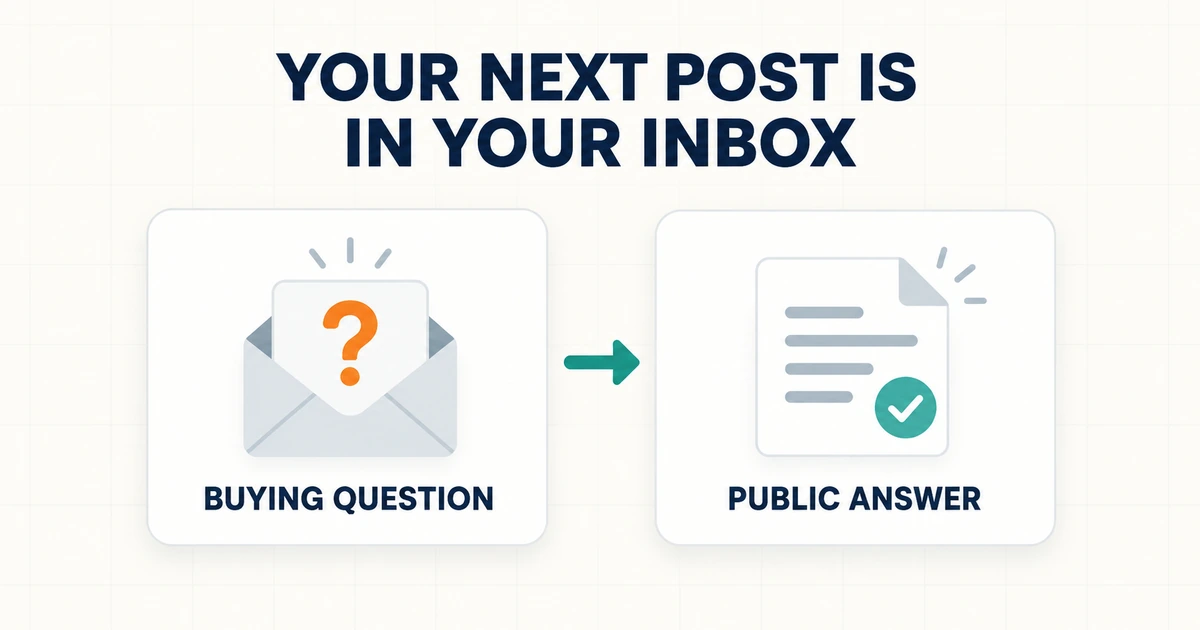
Your next useful blog post may already be sitting in a sales conversation.
Imagine a token founder asking what your public relations (PR) service costs. You explain the scope, exclusions and what changes the quote. Meanwhile, your website says: "Contact us for more information."
That gap is a practical starting point for inbound marketing for crypto service providers. You already have an answer that helps someone evaluate your service. Publishing it gives the next project a chance to understand the offer before contacting you.
Start with one buying question. Make the answer useful, decide where it belongs, and give the reader a relevant next step.
Rewrite the answer before planning more posts
Consider this question:
How much does a token-launch PR campaign cost, and what is included?
An evasive answer would be:
Every project is unique. Contact our expert team for a customized solution.
The buyer still cannot judge scope, cost drivers or readiness. The page asks for contact details before offering much help.
Here is a more useful version for a service where an exact quote requires an agreed scope.
Illustrative copy for a fictional PR agency. This is a writing example, not a LeadGenCrypto service or a tested conversion result.
We quote launch PR after confirming the announcement, target markets and amount of writing required. An existing announcement ready for media outreach has a different scope from work that also needs messaging, interviews and a new press release.
Our proposal separates preparation, writing and media outreach. It lists the deliverables, revision allowance and campaign period before you commit. Translation and paid placements are quoted separately.
You need a defined announcement and someone who can approve materials. If you are still deciding what the project should say, start with messaging work before commissioning a launch campaign.
We commit to the agreed work. Independent editorial coverage and changes in token price are not promised outcomes.
To request a scope and quote, send your public project website, a non-confidential summary of the announcement and your target date. We will assess fit and identify any information needed for a proposal.
The revision does several jobs. It names the variables behind the quote, separates included work from extras, explains readiness, and gives the inquiry a purpose.
It still does not answer the numerical price question. If the agency can publish a genuine starting price or representative range, that belongs near the beginning. Explain the scope behind the figure. If a range would mislead, explain why the variables matter and how the quote is prepared.
The distinction is useful: the public page explains how to evaluate the service; the private conversation applies that explanation to a particular project.
A detailed answer may save the reader a call. It may also reveal that your service is unsuitable. Both are legitimate outcomes.
Choose questions that change a buying decision
Before commissioning another article, review conversations your business has permission to use: inquiry emails, discovery-call notes, proposal feedback and support requests.
Look for uncertainty that affected a decision. What did a project need to understand before agreeing to a call, accepting a quote or paying an invoice?
Keep the buyer's wording. "Can we pay in our own tokens?" is a clearer starting point than "Alternative compensation models in decentralized ecosystems." The answer should explain your actual policy and constraints.
Beside each question, record the service, project stage, current answer and evidence needed before publication. Prioritize questions that meet three conditions:
- They come from projects you can serve.
- They affect whether or how someone buys.
- You can answer them with specific, accurate information.
Frequency helps, but it is not the only test. One lost proposal can reveal an important gap. A common question from people who cannot use your service may need a short answer instead of a major article.
If fit is unclear, first define which crypto projects your service can help. That makes the content brief more useful than a broad instruction to write about crypto.
Publish the general answer, with identifying and confidential details removed. A private conversation is source material to handle carefully, not permission to publish its contents.
Use five buyer-question categories to find the gaps
Marcus Sheridan's They Ask, You Answer argues for addressing buyers' questions openly. Its five major categories are pricing and costs, problems, comparisons, reviews, and best-in-class options.
Use them to find unanswered decisions in your own service business. These are suggested topics, not measured search-volume claims.
| Category | A question a crypto project might ask | What a useful answer needs |
|---|---|---|
| Pricing and costs | What changes the price of our launch PR campaign? | Real scope variables, meaningful prices where available, and exclusions |
| Problems | When is our announcement not ready for media outreach? | Readiness criteria, failure risks and work to complete first |
| Comparisons | Should we hire a PR agency or handle outreach internally? | A fair account of capacity, control, cost and trade-offs |
| Reviews | What should we check in a PR proposal? | Evaluation criteria and examples you have permission to share |
| Best-in-class options | Which type of PR support fits our project stage? | Clear selection criteria and situations where each option fits |
You do not need five articles immediately. Choose the question that is currently blocking a suitable prospect's decision.
For comparisons, disclose when you sell one option. Give alternatives a fair description, including doing the work internally or postponing it. If every possible situation ends with "hire us," reconsider whether the page helps the buyer choose.
Decide between a service-page FAQ and an article
A small provider can begin with the page prospects already visit.
Use a service-page FAQ when the answer fits clearly into a few paragraphs. Questions about included deliverables, revisions, supported scope and proposal inputs usually belong close to the relevant service information.
Use a dedicated article when the decision needs a worked example, a substantial comparison or several important exceptions. A detailed cost breakdown can support a short pricing answer on the service page.
Create a resource hub when the library becomes difficult to navigate. A hub is a way to organize useful answers, not a prerequisite for writing the first one.
Avoid creating separate thin pages for three versions of the same question. Combine them when the underlying decision is the same.
Google's people-first content guidance emphasizes original value and helping readers achieve their goals. It also says Google has no preferred word count. Let the complexity of the answer determine the length.
For discovery, give the page a descriptive title, publish the answer as readable text, and link to it from relevant pages. Check that intended public pages can be crawled and are not accidentally marked noindex. These are publishing checks, not promises of search visibility.
Copy this answer-page template
Use the template to brief a writer or revise an existing service answer. Complete the substance before polishing the language.
Buyer's question:
Service and project stage:

Direct answer:
Answer the question before adding background.

What changes the answer:
Explain scope, price drivers, timing and important exceptions.

Evidence:
Add an approved example, sample deliverable or source.
Label illustrative examples clearly.

Fit and limits:
Who can use this service? Who should choose another approach?

Private next step:
What project-specific information is still needed?
What will the buyer receive after submitting it?

Owner and review:
Who verifies this answer?
When was it checked, and what changes should trigger a review?
The person responsible for delivering the service should verify the answer. A writer can improve the explanation, but should not invent pricing, capabilities, exclusions or commitments.
Check the page against the original question. If the buyer asks what a package includes and the answer only explains why PR matters, revise the answer before adding a button.
Keep useful answers public and sensitive details private
Publishing an explanation does not mean giving away the entire service.
You can describe how you assess campaign readiness without researching a particular project's media opportunities for free. You can show an approved sample deliverable without exposing a client's unpublished announcement.
When clients need a detailed assessment, say what that assessment involves and whether it is a paid engagement. The public answer should help them decide whether that next step is useful.
Competitors may read the page too. That is a reason to choose evidence carefully, not to hide basic information your buyers need. Publish reasoning, scope and examples you can legitimately share. Keep confidential working material private.
Remove identifying details from source conversations. Obtain permission before using a client's name, quote, results or screenshots. Unpublished vulnerabilities and confidential launch plans belong in an appropriate private channel.
AI can help organize approved notes or improve a draft. It should not decide what your business can promise. Verify its output, and do not submit confidential conversations unless your policies and permissions allow that use.
Match the next step to the answered question
After explaining campaign costs, invite a project-specific proposal request. After explaining scope, offer an appropriate scope assessment. State what the buyer should submit and what they will receive.
Keep the initial request proportionate. A public project website, contact method, service needed and brief goal may be enough to start. Ask for a target date or budget range when it helps assess fit. Leave sensitive documents for a suitable private channel.
An ordinary service inquiry should not require a wallet connection, transaction signature or private key.
Explain who handles the inquiry and what happens next. Publish a response-time commitment only if your team can meet it. Then test the journey on a phone: read the answer, open the form, submit a test inquiry and confirm that the right person receives it.
If useful content already attracts readers but the handoff remains unclear, use the separate guide to connecting content with an appropriate sales conversation. Here, the first job is making the answer worth acting on.
Share the answer and track qualified inquiries
You do not need to wait for search traffic to use a published answer.
When a prospect asks the question, give a short personal response and link to the fuller explanation. Before a proposal call, share the relevant scope page. Afterward, share the answer that addresses an unresolved concern.
This is one practical part of combining outbound conversations with inbound content. The page helps the next conversation without requiring the salesperson to start from a blank email.
If you also need to evaluate project contacts for prospecting, review the Leads documentation and claim a free lead to inspect the data. LeadGenCrypto provides token-project records with verified emails and supports CSV export. A contact record does not establish buying intent or permission to send a campaign.
Before new outreach, verify the project's official business contact route, check relevance and applicable consent requirements, honor opt-outs and maintain suppression and list hygiene. Reusing an article is not a reason to send it indiscriminately.
For measurement, define a qualified inquiry before counting results. Your definition might require a service need you can meet, a project within your supported scope and a plausible next step.
Track the path from answer-page visits to inquiries, qualified conversations and proposals. Keep two uses distinct:
- Content-sourced: someone discovers the answer and then approaches your business.
- Content-assisted: an existing prospect reads an answer shared during the sales process.
Record both on the same opportunity when appropriate. Do not count an assisted interaction as a second new lead.
Use the evidence to choose what to inspect. Visits without inquiries may mean a weak next step, an incomplete answer or readers who are not ready. Form starts without submissions justify checking the form. Many poor-fit inquiries justify revisiting whom the page addresses.
Small audiences can still be useful. Judge whether the answer helps suitable projects make progress, alongside traffic. No fixed publication schedule or search deadline guarantees that result.
Publish one answer before expanding the library
Choose one service and one buying question from a conversation you may use. Draft the answer, ask the delivery owner to verify it, and publish it where a prospect would expect to find it.
Before sharing it, check:
- The answer addresses the actual question and explains its limits.
- Prices, examples and commitments are accurate.
- Confidential details are removed or approved.
- The next step works, and someone owns the response.
- A named owner will update the page when scope or pricing changes.
For more practical ideas on service content and outreach, subscribe to LeadGenCrypto's updates.
Next time a prospect asks that question, use the page in your reply. Notice what they still need to know. That is your next edit.