New crypto projects emails for agencies: first 48 hours

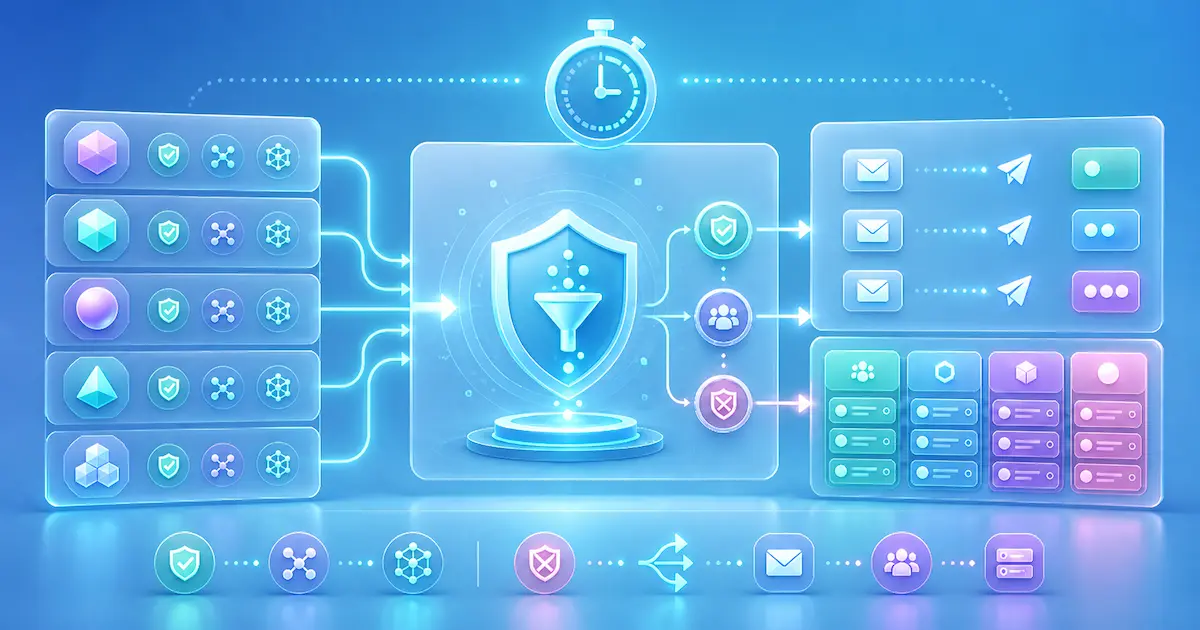
- Built for service providers selling work to crypto projects and token projects.
- This is the intake window right after a contact drop, not the site’s full contact-list quality thesis.
- Use new crypto projects emails for agencies inside a 48-hour SLA.
- Clean project contacts before SDRs write copy or assign owners.
- Route each row by fit, role, identifier quality, and suppression risk.
- Send one small first wave, then scale from reply data.
- Keep this focused on project contacts, not token buyers or investors.
Fresh crypto project contacts spoil in months, not years. Teams stall while they polish copy, or they speed-run sends before project identity and suppression are settled. Both paths waste the window where a launch is still legible in public data and reply signals are still trustworthy. This guide is written for agencies, founders, RevOps teams, sales teams, and other B2B service providers pitching professional work to crypto projects and token projects rather than issuer promotion, fundraising pipelines, retail investor campaigns, or "find holders for our token" plays. Here, leads means project contacts and outbound targets suited to service pitches, not token shoppers hunting allocations.
When new crypto projects emails for agencies arrive as a fresh export or API pull, this guide gives you one shared 48-hour crypto outreach SLA: a practical contract for what happens immediately after that drop. You get ordered decisions (intake, dedupe, suppression, routing, first wave, CRM logging) so RevOps, strategists, and senders stop improvising and start measuring. The output is not maximum volume. It is a clean first batch, clear ownership, and reply data that tells you whether routing worked before you scale.
For why verified lists beat stale exports, read why static contact databases fail for agency outreach. For upstream discovery through pipeline design, use the delegate-ready playbook for finding token projects to pitch.
An outreach SLA is a time-boxed agreement your own team follows once new project contacts hit your stack: who acts first, which quality gates a row passes before anyone sends, and what “done” looks like in the CRM (owners, outcomes, suppression updates). For B2B sellers to token projects, it turns vague “we will follow up” into shared deadlines and handoffs so outreach stays compliant, measured, and aligned with your offer. It is an internal operating contract, not a promise you make to prospects on paper, unless you choose to publish it to a client.
What you can do with it: turn “we got a file” into a repeatable handoff, cut duplicate or protected sends, keep first-touch copy honest to public facts, and leave your CRM ready for wave two without restarting from memory.
Under that SLA, the team aligns on one goal after contacts land: prove every row is safe to use, on-scope for the offer, and assigned before a small first wave goes out and reply data sets the next move without spray-and-pray.
Why a 48-hour SLA matters right after new crypto project emails arrive
Fresh project contacts lose value when your team treats them like an old database. The first two days are not about sending as much as possible. They are about proving that every contact is safe to use, relevant to your offer, and routed to the right owner.
A newly launched token project can change its site, public narrative, contact route, or partner stack quickly. The same project can also appear twice under different rows if your team combines manual research, CSV exports, and API pulls. Waiting a week does more than slow you down. It teaches bad habits: duplicate sends, weak role matching, and copy that guesses instead of observing.
For a service provider, the first 48 hours should answer four questions:
- Intake: do we trust the project identity and source batch?
- Suppression: is this project or email protected by an opt-out, bounce, client rule, or exception?
- Routing: who owns the row, and what service motion fits the project?
- First wave: which small group is clean enough for a measured first touch?
| SLA window | Decision to make | Typical owner | Output |
|---|---|---|---|
| 0 to 2 hours | Is the drop safe to enter the send queue? | RevOps or agency lead | Clean master view with duplicate and protected rows removed |
| 2 to 8 hours | Which rows match the offer and buyer motion? | Strategist plus SDR lead | Route labels, hold reasons, and owner assignment |
| 8 to 24 hours | Which contacts deserve the first wave? | SDR, AE, or founder | Small batch sent with one message type and one CTA |
| 24 to 48 hours | Should the team repeat, fix, or pause? | RevOps plus campaign owner | Outcome log, updated suppression, and wave two plan |
Use this quick pre-send check before anyone opens a sequencer:
- Batch name includes date, source, and owner.
- Project identity has token URL or token address plus blockchain.
- Email record has a verified address or a clear hold reason.
- Suppression sources are merged before copywriting starts.
- Route label explains why this project fits your service.
- First-wave size matches what the sender can personalize honestly.
After the first wave, draft follow-up prompts from fresh contact fields instead of recycling the opener.
This is not a static-list critique. It is the operating layer after fresh contacts land.
Create one shared SLA view for the next drop. Do not let copywriting start until every row has a status: send, suppress, hold, or route later.
Protect dedupe before your crypto project outreach list moves
A fresh export is not clean just because it is recent. The agency risk is not only a bad email. It is sending twice to the same project, emailing a protected contact, or paying attention to rows that should have been suppressed before the first meeting.
Start by freezing the file or feed snapshot. Name it with the date, source, and owner, for example export-2026-05-04-token-projects.csv. If you use API intake, store a batch timestamp and the action used to pull the records so your team can explain where a contact entered the workflow.
A crypto project outreach list for agencies needs project-level dedupe, not only email-level dedupe. Email alone can miss duplicates because a project might use one domain email, one generic inbox, and one vendor contact. Use project identity first, then contact identity.
Minimum dedupe logic:
- Project key: token URL when present, otherwise token address plus blockchain.
- Contact key: verified email, normalized domain, and source batch.
- Exception key: email or token URL that should not be bought, imported, or sent again.
- Client rule: do-not-contact accounts, partner accounts, active opportunities, and current clients.
- Hold reason: missing token identifier, broken website, suspicious domain mismatch, or unclear fit.
A crypto outreach suppression list should travel with the team, not stay inside one campaign file. Include bounces, opt-outs, client-protected accounts, not-a-fit replies, duplicate token URLs, and contacts already owned by another rep or client account. To align uploads with dedupe keys and budgets, mirror the workflow in using LeadGenCrypto for email and token URL exceptions.
Suppression sources to merge before sending:
Bounced emails
Opt-out replies
Client do-not-contact rules
Active opportunities
Current clients
Duplicate token URLs
Duplicate token addresses on the same blockchain
Outside-pipeline contacts from prior campaigns
Pause the clock when the export has no stable project identifier. Without token URL or token address plus blockchain, your team cannot dedupe crypto project contacts safely. Enrich or hold those rows before they reach a sender.
Audit your last exported file and mark the exact dedupe keys used. If the answer is only email, add token URL and blockchain plus token address before the next send.
Route a verified token project email list for agencies into buyer motions
Routing beats deep research in the first few hours. Your team does not need a full account plan for every row. It needs enough context to avoid wrong-role outreach and to choose the first message lane.
A verified token project email list for agencies becomes useful when every row has a buyer motion. A PR agency may look for a launch communications window. An SEO team may look for content depth, category pages, or publication gaps. An audit provider may care about launch stage and contract visibility. A listing service may care about chain, token symbol, and whether the project has basic public materials.
Use a five-minute bar. The goal is to decide whether the row is send-ready, hold-worthy, or out of scope. Do not let perfection delay the first wave, but do not let speed override obvious risk.
| Signal | Send-ready pattern | Hold or suppress pattern | Agency example |
|---|---|---|---|
| Website match | Site loads and matches token name or symbol | Broken site, unrelated brand, or parked domain | PR team checks whether a launch page exists |
| Identifier quality | Token URL or token address plus blockchain is present | No stable token identifier | Listing provider holds until chain context is clear |
| Contact fit | Proton, Gmail, and other personal inboxes are common; send-ready when you can tie the address to a public project signal (site, team page, listing, or social) | Personal-looking address you cannot connect to the project in any public source | SEO agency keeps copy tied to public page facts, even when the only email is a secondary non-corporate inbox |
| Offer fit | Project stage matches your service window | Wrong chain, wrong stage, or wrong category | Auditor routes new launches differently from mature projects |
| Suppression status | No opt-out, bounce, client rule, or exception found | Any protected status appears | RevOps removes before SDR review |
Suggested route labels:
- Core team inbox: founder, team, or project-owned contact path.
- Growth or partner inbox: outsourced agency, marketing operator, or business contact.
- Vendor route: marketplace, listing, operational, or support-style contact.
- Generic inbox:
infoorcontactstyle address that needs lighter claims. - Hold queue: missing identifier, weak fit, or manual review needed.
- Suppress queue: duplicate, protected, opted out, bounced, or wrong audience.
Generic inboxes are not automatically useless. They require tighter copy. Do not pretend you know the founder. Reference only public facts, make one narrow ask, and avoid heavy personalization that the recipient cannot verify.
Add a route column before writing copy. Every contact should have one owner, one buyer motion, and one reason it is either send-ready or held.
Write the first touch email for crypto projects without sounding generic
The first send should prove relevance, not volume. This section covers wave one inside the SLA only. For the full cold email protocol, sequences, and trust framing, follow the step-by-step cold email framework for Web3 service providers. A first touch email for crypto projects should use public facts, a narrow service promise, and a respectful opt-out line. It should not imply insider access, trading advice, fundraising help, or market movement.
Keep wave one small enough that the sender can inspect each row. In many agency teams, that means 15 to 40 first touches, depending on headcount, offer complexity, and how much proof the email needs. A smaller honest wave is better than a larger lazy one because the first reply data tells you whether the routing logic worked.
Guardrails for the first wave:
- Reference only public launch facts such as website, blockchain, token name, token symbol, token URL, or token address.
- Choose one CTA, such as a short reply or a quick call, not multiple asks.
- Match the service to the project stage instead of pitching a full menu.
- Include an easy out so the team can close the thread cleanly.
- Log template ID, sender, route, and outcome before planning wave two.
- Avoid wallet-balance claims, investor language, market promises, and anything that sounds like token promotion.
Use this structure as a starting point. Replace the service language with your real offer, but keep the placeholders limited to the approved fields.
Subject: Quick question on {tokenSymbol} on {blockchain}

Hi team,

I saw {tokenName} live with a site at {website}. Your token details point to {tokenUrl} and {tokenAddress} on {blockchain}.

We help token project teams fix one launch-stage bottleneck with a short public-page review before any proposal.

Worth a brief look? If not relevant, reply "no thanks" and I will close the thread.

Thanks,
Your service team
A good first touch is specific without pretending to know private context. If the project has a generic inbox, shorten the proof and avoid founder-level assumptions. If the row has a core team route, you can make the service angle slightly more direct, but keep the ask simple.
Do not blast too many cold emails via Mailchimp, Mailgun, UniSender, or Apollo bulk. Expect spam placement.
Build the CRM pipeline for crypto project outreach from the SLA
The SLA fails when it stays trapped in a spreadsheet. A CRM pipeline for crypto project outreach should capture the project identity, contact identity, route, suppression status, and first-touch outcome so future campaigns do not restart from memory. For the full human-and-automation stage map beyond this two-day window, use Human Automate Sales Process to Crypto Projects in 6 Steps.
CSV can be enough for a small agency, especially when one owner reviews every row. API intake becomes useful when you receive daily drops, sync contacts into a CRM, or need the same suppression logic across sales, marketing, and delivery teams.
LeadGenCrypto users can export leads to CSV or pull leads through the Public API using actions such as viewRecentLeads and viewLatestLeads. Use the read-only endpoints reference for parameters, authentication, limits, and error shapes before you automate. Those records can be mapped into a CRM or internal sheet. The important part is not the tool choice. It is that the same fields are used every day.
| CRM field | Why it matters | Example value |
|---|---|---|
website | Confirms the public project presence | Project domain |
tokenAddress | Supports project-level dedupe | Contract address |
blockchain | Enables network filters and service routing | Ethereum, BNB Chain, or another supported network |
tokenName | Helps match project identity to copy | Project token name |
tokenSymbol | Adds compact context for first-touch review | Token symbol |
verifiedEmail | Stores the outreach contact | Project email |
sourceBatch | Shows when and how the record entered | Daily API pull or CSV export |
routeLabel | Connects the row to a buyer motion | Core team, partner, vendor, generic, hold, suppress |
suppressionStatus | Protects opt-outs, bounces, and exceptions | Clear, duplicate, opted out, client rule |
firstTouchOutcome | Drives wave two decisions | Sent, replied, bounced, unsubscribed, no response |
Use this intake snippet when deciding between CSV and API:
- Choose CSV when the owner reviews one batch manually and the campaign is not daily.
- Pick API intake when records should land in a CRM on a daily cadence.
- Keep exceptions centralized when several people source contacts from different places.
- Store the route label before the first email so outcome data is meaningful.
- Update suppression within 24 hours after opt-outs, bounces, or not-a-fit replies.
A token project leads agency workflow gets stronger when the CRM records why a row moved. Do not settle for stages like new and contacted only. Add routing and suppression fields so the next sender knows what happened.
Map your current CRM fields against the table above. Add any missing route, suppression, and source-batch fields before your next daily pull.
Copy and paste checklist for the token project leads agency workflow
The process should be simple enough to run daily without a senior strategist watching every row. A token project leads agency workflow works when intake, routing, sending, and measurement happen in the same order every time.
Copy this checklist into your ops doc, sheet, or CRM playbook. Assign one owner for each section and keep the same labels across CSV, API, and manual research sources.
First 48-hour SLA checklist

0 to 2 hours: intake and protection
[ ] Freeze the batch or log the API pull time
[ ] Name the source, owner, and date
[ ] Confirm website, token URL, token address, blockchain, token name, token symbol, and verified email when available
[ ] Dedupe by token URL or token address plus blockchain before email
[ ] Merge bounces, opt-outs, client rules, and exceptions
[ ] Hold rows with missing or unstable project identifiers

2 to 8 hours: qualification and routing
[ ] Check that the website matches the token story
[ ] Review email fit against the project site or known route
[ ] Assign a route label: core team, partner, vendor, generic, hold, or suppress
[ ] Match the row to one service motion
[ ] Remove wrong-audience rows before copywriting

8 to 24 hours: first wave
[ ] Select a small batch the sender can personalize honestly
[ ] Use one first-touch template and one CTA
[ ] Reference only public project facts
[ ] Include a simple opt-out line
[ ] Log sender, route, template ID, and send time

24 to 48 hours: measurement and next move
[ ] Record delivered, replied, bounced, unsubscribed, and no-response outcomes
[ ] Update suppression inside the same day
[ ] Fix bounce or routing issues before adding volume
[ ] Plan wave two only from rows that passed routing and were not in wave one
[ ] Document what changed before the next fresh drop
Use the checklist as an SLA, not a suggestion. If a row cannot pass intake or route review, it should not enter the first wave just because the sender has quota pressure.
Paste this checklist into your campaign workspace and assign owners today. Your first improvement is consistency, not more volume.
If your agency wants more real conversations with new token project teams, claim one free verified contact through the dashboard and run this 48-hour SLA on live rows.
Where LeadGenCrypto fits in the first 48 hours
LeadGenCrypto is the contact intake layer for service providers, not a shortcut around outreach discipline. It helps agencies and service teams work from fresh project contacts, but your team still needs dedupe, suppression, routing, and measured first touches.
LeadGenCrypto delivers verified leads of newly launched crypto projects and token projects on a daily cadence. A lead can include website, token address, blockchain, token name, token symbol, and verified email or emails. In this article, those leads are project contacts and outreach targets for B2B service sales. They are not token buyers, investors, or retail customers.
The product fits the SLA in five practical places:
- Data intake: export to CSV for manual workflows or pull through the Public API for automated intake.
- CRM sync: use actions such as
viewRecentLeadsandviewLatestLeadsto support daily CRM updates. - Network focus: apply blockchain network filters so the drop matches the chains your service team supports, using in-app chains and exception lists for spend control.
- Budget protection: upload email and token URL exceptions to avoid duplicates and reduce wasted outreach.
- Team control: keep route labels, outcomes, and suppression status in your own CRM or sheet.
Use this fit check before a larger pull:
- Filters match the blockchain networks your agency can serve.
- Exceptions include opt-outs, duplicate token URLs, and protected client accounts.
- Fields map into the same CRM columns used by your SLA.
- Outcomes update suppression before new contacts enter the queue.
Before the next pull, define the chains you serve, the service window you care about, and the exception lists that must be respected. After each first wave, update suppression and route outcomes before new contacts enter the queue.
Use one small batch to test your field mapping before scaling. Confirm that CSV or API intake captures project identity, verified email, route label, and suppression status.
LeadGenCrypto · Field notes for agency GTM
Inbox fuel for the next post-drop sprint
If your team sells services to crypto projects and token projects, these emails keep you posted on what we shipped, what we would run on a fresh list, and how to brief RevOps without fluff. Plain language, steady cadence, and you can leave with one click whenever you want.
- Tight post digests so stakeholders catch new playbooks without doom-scrolling the archive
- Punchy GTM and ops prompts you can paste into standups, SLAs, or SDR huddles
- Resources that respect deliverability, suppression, and routing (no hype cycles, no token price talk)
Frequently Asked Questions (FAQ)
What does a lead mean in this article?
A lead means a project contact and outreach target for a service provider. It can include project fields such as website, token address, blockchain, token name, token symbol, and verified email. It does not mean a token buyer, investor, or retail user.
Is this article for crypto projects looking for investors?
No. This is for agencies, founders of service businesses, RevOps teams, and SDR teams selling B2B services into crypto projects and token projects. It should not be used to find token buyers, fundraising contacts, or investment prospects.
What is a contact email for new crypto projects for agencies?
It is a project contact email that an agency can use for B2B service outreach after dedupe, suppression, routing, and basic fit review. The email should be treated as one field in a workflow, not as permission to blast.
How is this different from using a static crypto email database?
A static database asks your team to trust old contact records. This SLA assumes fresh project contacts are arriving and focuses on what happens next: dedupe, suppression, routing, first touch, and measurement within 48 hours.
What should happen in the first two hours after a fresh drop?
Freeze the batch, standardize fields, dedupe by project identity, merge suppression sources, and hold records with unstable identifiers. Nobody should write copy until protected and duplicate rows are removed.
How do I dedupe crypto project contacts before sending?
Start with project identity. Use token URL when available, otherwise token address plus blockchain. Then check verified email, domain, source batch, and exceptions. Email-only dedupe is too weak for token project outreach.
Should generic inboxes be excluded?
Not always. Generic inboxes can be usable when the project fit is strong and the message is narrow. Keep the claim lighter, avoid founder assumptions, and make the first CTA easy to answer.
Can I use CSV instead of the Public API?
Yes. CSV is practical when a person reviews each batch manually. API intake is better when you want daily pulls, CRM sync, or automated routing around actions such as viewRecentLeads and viewLatestLeads.
Where does a crypto outreach suppression list fit?
It fits before copywriting and after every send. Merge opt-outs, bounces, duplicates, client rules, and exceptions before wave one. Then update suppression after replies, bounces, and unsubscribe requests.
How large should the first outreach wave be?
Small enough that the sender can review and personalize honestly. For many agency teams, 15 to 40 first touches is a useful starting range. Reply quality and bounce behavior should decide whether volume increases.
Should chat channels be part of wave one?
Only when your source already has a team-approved public chat route and your service motion belongs there. For many teams, email is easier to track during the first SLA pass, then chat can follow after a positive reply.
Is this legal advice?
No. This is operational guidance for B2B service outreach. Outreach laws, platform rules, and consent requirements vary by region and use case. Review your process with qualified counsel before scaling.